

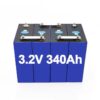
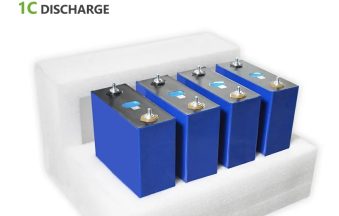
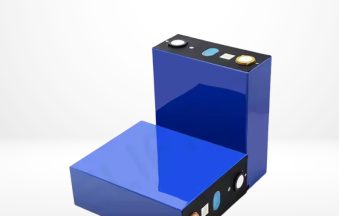
A reliable LiFePO4 battery solution starts with choosing battery cells that match your system’s capacity, operating conditions, and expected service life. For energy storage manufacturers and system integrators, cell consistency, internal resistance, and cycle performance directly affect the reliability of the finished battery pack. The GOTION 340Ah LiFePO4 cell offers a nominal capacity of 340Ah, a voltage of 3.2V, and a rated cycle life of at least 6,000 cycles under specified test conditions. These characteristics make it a potential choice for commercial energy storage, solar integration, electric vehicles, and industrial backup applications. Jule PowerTech helps customers source LiFePO4 battery products and explore configurations suited to their project requirements.
GOTION 340Ah LiFePO4 Cell: Technical Specifications
When selecting a high-capacity lithium iron phosphate cell, you should evaluate more than its nominal capacity. Voltage range, energy density, internal resistance, and cycle life all influence how the cell performs in an assembled battery system.
The GOTION 340Ah cell provides the following specifications:
| Parameter | Specification |
|---|---|
| Cell chemistry | Lithium Iron Phosphate (LiFePO4) |
| Nominal capacity | 340Ah |
| Nominal voltage | 3.2V |
| Energy density | ≥180Wh/kg |
| Operating voltage range | 2.5V–3.65V |
| Cycle life | ≥6,000 cycles |
| Cycle test condition | 80% DOD, 25°C |
| AC internal resistance | ≤0.25mΩ |
Its nominal energy is approximately 1,088Wh, calculated using 340Ah × 3.2V. This figure helps you estimate the energy contribution of an individual cell when planning a larger battery system.
The actual system capacity and output depend on the number of cells, series and parallel configuration, BMS settings, and operating conditions.
Why Choose a 340Ah LiFePO4 Cell for Your Battery Solution?
A high-capacity cell can simplify battery system design by reducing the number of individual cells needed to reach a target capacity. However, the right choice also depends on operating requirements and integration compatibility.
1. High Capacity for Energy Storage
With a nominal capacity of 340Ah, this GOTION LiFePO4 battery cell supports applications that require substantial energy storage.
For example, manufacturers developing commercial and industrial energy storage systems can evaluate its capacity when designing battery modules for solar power storage, peak-load management, and backup electricity.
2. Long Cycle Life
The cell offers a rated cycle life of at least 6,000 cycles at 80% depth of discharge (DOD) and 25°C.
This specification provides a useful reference when estimating battery replacement intervals and evaluating long-term operating costs. Actual cycle life varies with charging conditions, discharge rates, temperature, and maintenance practices.
3. Stable Electrical Performance
The specified AC internal resistance is no more than 0.25mΩ. Lower internal resistance can help reduce resistive losses and heat generation during operation.
For battery pack manufacturers, cell consistency also matters. Matching cells according to electrical characteristics helps support more balanced pack performance.
4. LiFePO4 Chemistry for Safety-Oriented Applications
Lithium iron phosphate chemistry offers good thermal stability compared with several other lithium-ion chemistries.
Nevertheless, a safe battery system requires appropriate cell integration, temperature monitoring, overcurrent protection, and a compatible battery management system (BMS).

GOTION 340Ah Cell vs. Complete LiFePO4 Battery Pack
Before purchasing, you should distinguish between a battery cell and a finished battery pack. Although both use LiFePO4 chemistry, they serve different purchasing and engineering requirements.
| Comparison | 340Ah Battery Cell | Complete Battery Pack |
|---|---|---|
| Product format | Individual cell | Multiple assembled cells |
| Nominal voltage | 3.2V | Depends on configuration |
| Capacity | 340Ah | Depends on cell arrangement |
| BMS | Requires system integration | Usually integrated |
| Main buyers | Cell distributors, pack manufacturers | End users, system integrators |
| Customization | Pack design and assembly required | Depends on supplier |
If you manufacture battery systems, purchasing individual 340Ah cells gives you more flexibility in developing your own pack configuration. Conversely, if you need a ready-to-install energy storage product, a pre-configured battery pack may be more suitable.
How to Select the Right LiFePO4 Battery Solution
Choosing a suitable battery cell requires a clear understanding of your application’s electrical and operational requirements. Follow these steps before placing an order.
- Define your energy requirements. Calculate the required capacity, nominal voltage, power output, and backup duration for your application.
- Check cell compatibility. Confirm that the 3.2V nominal voltage and 340Ah capacity meet your battery system design requirements.
- Evaluate cycle life. Compare the rated 6,000-cycle performance with your expected daily charge and discharge patterns.
- Plan BMS integration. Select a BMS that supports the required voltage, current, temperature monitoring, and protection functions.
- Verify product documentation. Request the manufacturer’s technical datasheet, test reports, and applicable certification documents before finalizing your procurement decision.
Jule PowerTech was established in 2019 and has a 50+ member professional team. With experience in LiFePO4 battery products, customized battery solutions, and quality control, the company supports customers evaluating cells and battery configurations for different applications.
Typical Applications of GOTION 340Ah LiFePO4 Cells
The GOTION 340Ah cell can be considered for several applications where high-capacity energy storage is required.
- Commercial and industrial energy storage: Battery modules for storing electricity and supporting backup power systems.
- Solar energy storage: Battery configurations for storing electricity generated by solar installations.
- Electric vehicles: Cell integration for EV battery systems, subject to vehicle design and electrical requirements.
- Industrial backup power: Energy storage systems designed to provide backup electricity for equipment and facilities.
For each application, you should assess discharge current, temperature range, installation environment, and system-level safety requirements before selecting a cell.
Frequently Asked Questions
1. How much energy does a GOTION 340Ah LiFePO4 cell provide?
At a nominal voltage of 3.2V and capacity of 340Ah, the cell provides approximately 1,088Wh (1.088kWh) of nominal energy.
2. How long does the GOTION 340Ah LiFePO4 cell last?
Its rated cycle life is at least 6,000 cycles at 80% DOD and 25°C. Actual lifespan depends on operating temperature, charging and discharging conditions, and battery management.
3. Can the 340Ah cell be used in a solar energy storage system?
Yes. It can be evaluated for solar storage applications as part of a properly designed battery system. You need to ensure compatibility with the inverter, BMS, charging parameters, and required system voltage.
Contact Jule PowerTech for Your Battery Requirements
If you are developing a commercial energy storage project, solar battery system, or industrial backup solution, choosing the right cell is an important first step.
Jule PowerTech provides LiFePO4 battery products, customized battery solutions, and technical support to help you evaluate suitable configurations. Contact our team to discuss your required capacity, voltage, application, and purchasing requirements for the GOTION 340Ah cell.
Conclusion
Selecting a suitable LiFePO4 battery solution requires balancing capacity, cycle life, electrical compatibility, and application requirements. The GOTION 340Ah LiFePO4 cell offers a nominal capacity of 340Ah, 3.2V voltage, energy density of at least 180Wh/kg, and a rated cycle life of 6,000 cycles or more under specified conditions. With its LiFePO4 product experience and customized solution capabilities, Jule PowerTech can help you evaluate battery options for energy storage, solar integration, EVs, and industrial backup systems.








Add comment