

Choosing a Customized long cycle life battery requires more than comparing capacity and purchase price. You need a reliable cell, compatible battery management, suitable charging parameters, and a design that matches your operating conditions. For energy storage integrators, battery pack manufacturers, and renewable energy businesses, selecting the wrong cell can create integration challenges and increase maintenance costs.
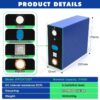
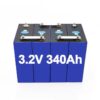
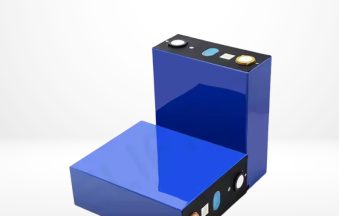
The EVE MB31 LiFePO₄ cell offers a nominal capacity of 280Ah and an energy rating of 896Wh at 3.2V. Jule PowerTech Co., Ltd. supplies lithium iron phosphate cells and battery packs for applications including home energy storage, golf carts, backup power, and off-grid systems. Understanding the MB31’s specifications and integration requirements helps you determine whether it fits your next battery project.
EVE MB31 280Ah LiFePO₄ Cell: Key Specifications
The EVE MB31 uses lithium iron phosphate (LFP) chemistry, which is widely used in energy storage applications that prioritize thermal stability and long service life. Its high capacity can help battery designers reduce the number of parallel cells required for a target storage capacity.
Technical Specifications
| Parameter | EVE MB31 Specification |
|---|---|
| Battery chemistry | LiFePO₄ (LFP) |
| Nominal capacity | 280Ah |
| Nominal voltage | 3.2V |
| Nominal energy | 896Wh |
| Charge voltage | 3.65V |
| Discharge cut-off voltage | 2.5V |
| Maximum charge current | 140A (0.5C) |
| Maximum discharge current | 280A (1C) |
These figures provide a starting point for system design. Actual operating limits depend on the manufacturer’s current datasheet, temperature limits, installation conditions, and battery management system (BMS) settings.
Before integrating the cell, confirm its dimensions, terminal design, mechanical requirements, and recommended charging profile with your supplier.
Why Choose a Customized Long Cycle Life Battery?
A Customized long cycle life battery should match your required capacity, voltage, discharge rate, and working environment. Starting with a suitable LiFePO₄ cell can simplify system design, but the complete battery’s performance also depends on cell consistency, thermal management, electrical connections, and protection settings.
Key benefits include:
- High capacity: A 280Ah cell provides 896Wh of nominal energy, making it suitable for larger battery configurations.
- Stable chemistry: LiFePO₄ chemistry supports applications where safety and dependable operation are important.
- Flexible integration: Multiple cells can be configured to meet project-specific voltage and energy requirements.
- Controlled charging and discharging: Correct BMS configuration helps protect the battery against overvoltage, undervoltage, overcurrent, and other specified fault conditions.
- Application-specific design: Cell selection and pack engineering can address different load profiles and installation constraints.
Jule PowerTech was established in 2019 and has a 50-plus-member professional team. The company provides LiFePO₄ cells, pre-configured 12V, 24V, and 48V battery packs, and customized battery solutions for different customer requirements.
Where Can You Use the EVE MB31 Cell?
The MB31’s capacity makes it a candidate for several energy storage applications, provided the final configuration meets the system’s electrical and mechanical requirements.
- Home energy storage: Integrate compatible cells into a properly engineered battery pack for residential storage and solar energy use.
- Off-grid energy systems: Design storage capacity around daily energy consumption, inverter requirements, and expected autonomy.
- Renewable energy projects: Pair a suitable battery configuration with compatible solar or other renewable energy equipment.
- Backup power: Evaluate the required runtime, continuous load, peak current, and inverter compatibility before selecting a battery configuration.
- Electric mobility and industrial equipment: Assess voltage, discharge demand, vibration resistance, enclosure design, and applicable safety requirements before deployment.
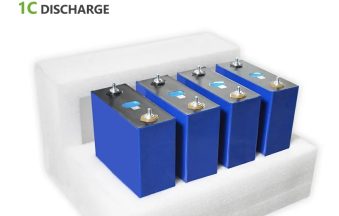
The MB31 is a single 3.2V cell, not a complete 12V, 24V, or 48V battery pack. You must connect compatible cells in an appropriate configuration and incorporate the required protection and control systems.

EVE MB31 vs. a Standard 12V LiFePO₄ Battery Pack
| Comparison | EVE MB31 Cell | Standard 12V LiFePO₄ Pack |
|---|---|---|
| Product type | Individual cell | Assembled battery pack |
| Nominal voltage | 3.2V | Typically 12.8V |
| Capacity | 280Ah | Depends on model |
| Nominal energy | 896Wh | Depends on capacity |
| BMS | Requires system-level integration | Usually integrated |
| Best suited for | Battery pack engineering and integration | Applications needing a ready-to-use battery |
A 12.8V, 280Ah battery pack would provide approximately 3,584Wh of nominal energy. Four 3.2V, 280Ah cells connected in series can theoretically produce that nominal voltage and energy, subject to compatibility and system design.
Choose individual cells if you have the engineering capability to assemble and validate a battery pack. A pre-configured battery may be more appropriate if you need a ready-to-integrate product with defined electrical interfaces and protection features.
How to Source a Customized Long Cycle Life Battery
Follow these steps before placing a bulk order:
- Define your requirements. Specify nominal voltage, capacity, energy demand, continuous and peak current, and expected operating conditions.
- Confirm cell compatibility. Request the current EVE MB31 datasheet and verify the cell’s electrical, mechanical, and thermal specifications.
- Review the battery design. Check the BMS, enclosure, connections, cooling requirements, and applicable installation standards.
- Verify quality documentation. Request available test reports, traceability records, and relevant certifications for the exact cell or completed battery pack.
- Validate a sample. Where practical, evaluate charging, discharging, temperature behavior, and system compatibility before scaling production.
Jule PowerTech offers customized battery solutions and after-sales technical support. Discussing your operating requirements early can help your team identify a suitable configuration before committing to production.
Frequently Asked Questions
1. How long does the EVE MB31 LiFePO₄ cell last?
Cycle life depends on operating temperature, depth of discharge, charging conditions, current, and other factors. Jule PowerTech describes cycle life of up to 8,000 cycles across its product portfolio, but you should request model-specific test data before treating that figure as the MB31’s rated cycle life.
2. Can the EVE MB31 be used in a home energy storage system?
Yes, it can be evaluated for home energy storage when incorporated into a properly engineered battery system. Confirm cell compatibility, BMS protection, inverter requirements, installation conditions, and applicable safety standards before deployment.
3. Does Jule PowerTech provide customized LiFePO₄ battery solutions?
Jule PowerTech provides customized battery solutions alongside individual LiFePO₄ cells and pre-configured battery packs. Contact the company with your voltage, capacity, application, and order requirements to discuss suitable options.
Conclusion
Selecting a Customized long cycle life battery starts with accurate specifications, verified cell quality, and a design that fits your application. The EVE MB31 offers 280Ah capacity, 3.2V nominal voltage, and 896Wh of nominal energy, making it a potential option for professionally engineered energy storage systems. Work with Jule PowerTech to evaluate cell compatibility, documentation, and customization requirements before finalizing your design.
Request a Battery Solution from Jule PowerTech
Share your target voltage, capacity, application, estimated order quantity, and required certifications with Jule PowerTech. The team can help you evaluate suitable LiFePO₄ cells or customized battery configurations for your project.
Visit Jule PowerTech to discuss your requirements or contact the team about the EVE MB31 cell.









Add comment