

A reliable telecom base station battery helps maintain network availability when the main power supply fails. For telecom operators and system integrators, selecting the right battery involves more than comparing capacity and price. You also need to evaluate backup duration, charging requirements, operating temperature, battery management, and compatibility with existing DC power equipment.
Lithium iron phosphate (LiFePO₄) technology offers a practical option for communication infrastructure because of its thermal stability and potential for long cycle life. Jule PowerTech Co., Ltd. supplies LiFePO₄ battery cells and pre-configured battery packs for energy storage applications. Its EVE 280Ah cell provides a starting point for evaluating high-capacity battery configurations, subject to system design and telecom-specific requirements.
Why Telecom Base Station Batteries Matter
Telecom base stations depend on continuous power for radio equipment, transmission devices, network controllers, and supporting systems. A grid outage can interrupt these services unless the site has sufficient backup capacity.
A suitable telecom backup power battery can help you:
- Maintain network continuity: Supply power during temporary grid failures.
- Support remote sites: Reduce dependence on frequent on-site maintenance where locations are difficult to access.
- Manage operating costs: Evaluate lifecycle costs alongside the initial purchase price.
- Integrate renewable energy: Work with solar generation and other energy sources where the system design supports them.
However, the battery must match the site’s actual load profile. A high-capacity cell alone cannot guarantee a particular backup duration or uninterrupted operation.
Is a 280Ah LiFePO₄ Cell Suitable for Telecom Backup Power?
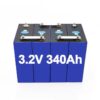
Jule PowerTech’s EVE 280Ah LiFePO₄ cell has a nominal voltage of 3.2V and a rated capacity of 280Ah. Its nominal energy is 896Wh, calculated by multiplying voltage by capacity.
| Parameter | EVE 280Ah LiFePO₄ Cell |
|---|---|
| Cell chemistry | Lithium iron phosphate (LiFePO₄) |
| Nominal capacity | 280Ah |
| Nominal voltage | 3.2V |
| Rated energy | 896Wh |
| Charging voltage | 3.65V ± 0.05V |
| Charge termination current | 14A (0.05C) |
| Discharge termination voltage | 2.5V |
| AC internal resistance | ≤0.25mΩ |
| Stated cycle life | Over 6,000 cycles, with more than 80% capacity retention as described in the product information |
These specifications help engineers assess the cell during preliminary system design. Nevertheless, the complete battery configuration must meet the telecom site’s voltage, current, protection, and backup-duration requirements.

Cell vs. Complete Telecom Battery System
A single 3.2V cell is not a direct replacement for a typical telecom DC battery system. Multiple cells must be configured appropriately, with a compatible battery management system (BMS), electrical protection, and suitable charging equipment.
Before purchasing, confirm whether you need individual LiFePO₄ cells, a custom battery module, or a complete telecom backup battery pack. This distinction affects installation, integration costs, safety requirements, and commissioning.
LiFePO₄ vs. Traditional Lead-Acid Batteries for Telecom Sites
Both technologies can support backup power, but their operating characteristics and system requirements differ.
| Evaluation Factor | LiFePO₄ Battery | Lead-Acid Battery |
|---|---|---|
| Cycle life | Potentially longer, depending on conditions | Generally lower under comparable cycling conditions |
| Energy density | Typically higher | Typically lower |
| Maintenance | Low routine maintenance with proper monitoring | Maintenance depends on battery type |
| Battery management | BMS required for lithium system protection | Monitoring and charging controls still required |
| Initial investment | Often higher | Often lower |
| Best-fit assessment | Frequent cycling and space-conscious designs | Projects prioritizing established infrastructure and initial cost |
Actual performance depends on operating temperature, discharge depth, charging practices, and product specifications. You should compare total ownership costs rather than making a decision based on battery chemistry alone.
How to Select a Telecom Base Station Battery
Follow these steps before finalizing your purchase.
- Calculate the backup load. Add the power consumption of all equipment that must remain operational. For example, a site with a continuous 1kW load requires 5kWh of usable energy for five hours of backup, before accounting for system losses and reserve capacity.
- Determine the DC voltage. Confirm whether your equipment requires a 48V-class DC system or another voltage configuration. Do not connect a 3.2V cell directly to equipment designed for a higher-voltage supply.
- Size the battery bank. Calculate the required energy and account for usable capacity, conversion losses, temperature, aging, and the required backup period.
- Check BMS and charger compatibility. Verify voltage limits, continuous and peak current, charging profiles, protection functions, and communication protocols where required.
- Verify operating conditions and documentation. Confirm the permitted temperature range, enclosure requirements, installation environment, and applicable transport and product certifications before deployment.
Why Consider Jule PowerTech for LiFePO₄ Battery Solutions?
Founded in 2019, Jule PowerTech Co., Ltd. has a team of 50 professionals and serves customers in more than 30 countries and regions, according to its company information. Its product portfolio includes LiFePO₄ cells and 12V, 24V, and 48V battery packs.
The company also reports having a manufacturing facility and warehouse in Los Angeles, USA, supporting its US-market operations. For telecom projects, buyers should confirm the availability of locally stocked products, technical support arrangements, and delivery timelines for their specific requirements.
When evaluating a supplier, request the following documentation:
- Cell datasheets and batch-level test reports.
- Battery pack specifications and BMS protection details.
- Applicable safety and transport certificates.
- Warranty terms and cycle-life test conditions.
- Confirmation of compatibility with your power system.
These checks help you assess whether a proposed battery configuration meets your project’s technical and procurement requirements.
Frequently Asked Questions
1. Can a 280Ah LiFePO₄ cell power a telecom base station?
A single 3.2V, 280Ah cell stores a nominal 896Wh. A complete telecom backup system requires an appropriately configured battery bank, compatible BMS, and suitable power conversion or charging equipment.
2. How do you calculate telecom battery backup time?
Divide usable battery energy in watt-hours by the connected load in watts. For example, 5,000Wh of usable energy divided by a 1,000W load provides approximately five hours of backup, excluding additional losses or reserve requirements.
3. What certifications should you check before purchasing?
Confirm the standards and approvals applicable to your destination market, installation type, and intended use. Depending on the project, relevant documentation may include IEC 62619, UN 38.3 transport test documentation, and applicable local electrical or telecom requirements. Do not assume that a cell or battery pack is certified unless the supplier provides valid supporting documents.
Conclusion
Choosing a telecom base station battery requires a clear understanding of backup duration, DC voltage, load demand, protection requirements, and operating conditions. LiFePO₄ technology can support telecom backup power designs, but the final solution must be engineered and validated for the intended installation. Jule PowerTech’s EVE 280Ah cell offers defined capacity and electrical specifications for preliminary evaluation, while system integrators must confirm complete battery configuration and application suitability.
Contact Jule PowerTech Co., Ltd. to discuss your required DC voltage, backup duration, operating environment, and battery configuration. Request the relevant datasheets and technical documentation to determine whether a suitable LiFePO₄ solution can meet your telecom project’s requirements.










Add comment