

A reliable solar storage battery is essential when you want to store excess solar energy, reduce dependence on the grid, and maintain power during outages. However, choosing the wrong battery capacity or cell configuration can affect system performance, installation costs, and long-term reliability. You need a solution that matches your energy consumption, inverter specifications, and operating conditions.
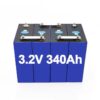
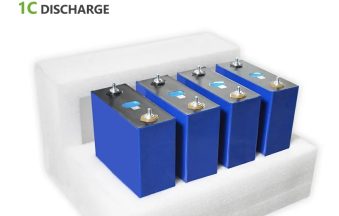
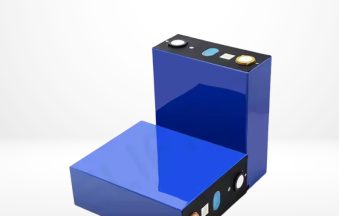
The EVE 280Ah LiFePO₄ cell from Jule PowerTech Co., Ltd. offers a high-capacity option for residential and commercial energy storage projects. With a nominal voltage of 3.2V, a rated energy of 896Wh, and a stated cycle life exceeding 6,000 cycles, this lithium iron phosphate cell provides a practical foundation for building customized solar battery systems.
Why Choose a LiFePO₄ Solar Storage Battery?
Lithium iron phosphate (LiFePO₄) technology is widely used in stationary energy storage because of its thermal stability, durability, and suitability for repeated charging and discharging.
When you install a solar energy system, your battery must handle daily charging cycles while supplying electricity when solar generation decreases. LiFePO₄ cells can support this operating pattern when properly configured with compatible battery management and charging equipment.
The EVE 280Ah cell offers several advantages:
- High capacity: Its 280Ah nominal capacity supports energy-intensive battery configurations.
- Rated energy of 896Wh: Calculated from 3.2V × 280Ah.
- Long cycle life: The product specification states more than 6,000 cycles with over 80% capacity retention.
- Thermal stability: LiFePO₄ chemistry offers favorable thermal stability for stationary storage applications.
- Low internal resistance: AC internal resistance is specified at ≤0.25mΩ.
- System compatibility: The cell can be integrated into appropriately engineered battery packs using compatible BMS and inverter configurations.
These characteristics make the cell suitable for projects that require dependable energy storage and flexible system design.
EVE 280Ah LiFePO₄ Cell: Technical Specifications
Before selecting a solar storage battery, you should compare its electrical parameters with your system requirements. The following specifications describe the EVE 280Ah single cell.
| Parameter | Specification |
|---|---|
| Cell model | EVE 280Ah |
| Battery chemistry | Lithium iron phosphate (LiFePO₄) |
| Nominal capacity | 280Ah |
| Nominal voltage | 3.2V |
| Rated energy | 896Wh |
| Charging voltage | 3.65V ± 0.05V |
| Termination charge current | 0.05C (14A) |
| Discharge termination voltage | 2.5V |
| AC internal resistance | ≤0.25mΩ |
| Cycle life | Over 6,000 cycles |
| Capacity retention | Over 80% |
This product is a single 3.2V battery cell, not a complete 12V, 24V, or 48V battery pack. You need multiple cells connected in an appropriate series and parallel configuration to build a higher-voltage energy storage system.
The final configuration must follow the cell manufacturer’s electrical limits and the battery pack designer’s engineering requirements.
Where Can You Use a 280Ah Solar Storage Battery Cell?
The EVE 280Ah LiFePO₄ cell can support several energy storage configurations. Its actual performance depends on pack design, BMS settings, inverter compatibility, and operating conditions.
1. Residential Solar Energy Storage
For homeowners with rooftop solar panels, battery storage helps retain excess electricity generated during daylight hours. You can then use stored energy in the evening or when solar production decreases.
A properly configured battery system can support household loads such as lighting, refrigerators, communication equipment, and selected appliances.
2. Commercial and Industrial Energy Storage
Businesses often need backup power for equipment, lighting, monitoring systems, and other essential electrical loads. Multiple 280Ah cells can be assembled into larger battery packs to support commercial and industrial energy storage projects.
However, the required capacity depends on peak power demand, backup duration, and daily electricity consumption.
3. Off-Grid and Hybrid Solar Systems
Off-grid properties, remote facilities, and hybrid solar installations need battery storage to balance electricity generation and consumption.
LiFePO₄ battery packs can store solar energy for use when sunlight is unavailable. This makes them suitable for appropriately designed systems in remote locations.
4. Additional Applications
Other potential applications include:
- Electric vehicle battery systems
- Telecom backup power
- Portable outdoor power stations
- Renewable energy storage projects

EVE 280Ah LiFePO₄ vs. Traditional Lead-Acid Batteries
When comparing battery technologies, you should consider cycle life, maintenance, usable capacity, and overall system requirements rather than purchase price alone.
| Comparison Factor | LiFePO₄ Battery | Lead-Acid Battery |
|---|---|---|
| Cycle life | Generally longer | Generally shorter |
| Energy efficiency | Generally higher | Generally lower |
| Maintenance | Usually low | May require maintenance |
| Weight | Generally lighter | Generally heavier |
| Thermal stability | Good | Chemistry-dependent |
| Initial cost | Usually higher | Usually lower |
For solar storage projects involving frequent charging and discharging, LiFePO₄ technology can offer advantages in long-term operation. Nevertheless, the right choice depends on your budget, load requirements, installation environment, and expected service life.
How to Select the Right Solar Storage Battery Configuration
Choosing a suitable battery system requires more than checking its amp-hour rating. Follow these steps before purchasing:
- Calculate your energy demand. Determine your daily electricity consumption in kWh and identify essential backup loads.
- Confirm the system voltage. Check whether your inverter requires a 12V, 24V, 48V, or another battery configuration.
- Calculate battery capacity. Consider the required backup duration, allowable depth of discharge, and energy losses.
- Check BMS compatibility. Ensure the battery management system supports the cell configuration, charging limits, discharge current, and protection requirements.
- Verify inverter compatibility. Confirm voltage, charging parameters, communication protocols, and operating current.
- Review product documentation. Request cell specifications, test reports, safety documentation, and applicable certification records before placing an order.
Following these steps helps you avoid configuration errors and select a battery system that matches your actual application.
Why Work with Jule PowerTech for LiFePO₄ Energy Storage?
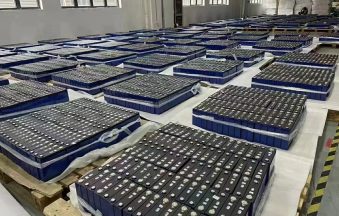
Jule PowerTech Co., Ltd. has focused on the lithium iron phosphate battery market since 2019. The company has developed a team of more than 50 professionals and supplies LiFePO₄ battery cells and pre-configured battery packs for different energy storage requirements.
Its main advantages include:
- Professional R&D team: Supports ongoing battery technology development and product improvement.
- Strict quality control: Implements testing procedures throughout the production process.
- Customized solutions: Provides battery solutions based on customer specifications and application requirements.
- After-sales support: Offers technical assistance to help customers address product and system-related questions.
Jule PowerTech reports a battery cycle life of up to 8,000 cycles across its product range. The EVE 280Ah cell featured here has a separately stated specification of over 6,000 cycles, so you should evaluate the cycle-life rating of each specific model.
The company also operates a manufacturing and warehouse facility in Los Angeles, USA, with local sales and service support. Its business reaches more than 30 countries and regions.
For procurement, ask the company for model-specific test reports and applicable safety certifications, such as UN38.3, IEC, UL, or CE documentation where relevant. Certification availability should be confirmed for the exact cell or battery pack rather than assumed across the entire product range.
Frequently Asked Questions
1. How much energy can an EVE 280Ah LiFePO₄ cell store?
A single EVE 280Ah cell has a nominal voltage of 3.2V and a rated energy of 896Wh. Actual usable energy depends on the operating voltage range, discharge limits, and system configuration.
2. Can I connect the 280Ah cell directly to a solar inverter?
No. A single 3.2V cell cannot directly replace a complete residential or commercial battery system. You need a properly configured battery pack, a compatible BMS, and an inverter that supports the resulting battery voltage.
3. How long does an EVE 280Ah LiFePO₄ battery last?
The product specification states more than 6,000 cycles with over 80% capacity retention. Actual service life depends on charging and discharging conditions, temperature, operating current, and battery management.
Conclusion
Selecting a reliable solar storage battery starts with understanding your energy requirements, battery chemistry, and system configuration. The EVE 280Ah LiFePO₄ cell provides 896Wh of rated energy, over 6,000 specified cycles, and a stable foundation for residential, commercial, and off-grid energy storage projects. With its product range, customization capabilities, and US-based service support, Jule PowerTech Co., Ltd. can help you evaluate suitable LiFePO₄ solutions for your next energy storage project.
CTA: Contact Jule PowerTech to discuss your solar storage requirements. Share your target system voltage, daily energy consumption, inverter model, and required backup duration to request suitable battery configurations, technical specifications, and a customized quotation.








Add comment