

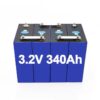
Choosing the right battery cell can directly affect your energy storage system’s capacity, service life, safety, and overall cost. If you are building a solar storage system, commercial energy storage project, or custom battery pack, you need reliable specifications and a cell that fits your system design. The LiFePO4 battery cell 280Ah from EVE offers a nominal voltage of 3.2V and rated energy of 896Wh, making it a practical option for high-capacity battery applications.
Jule PowerTech Co., Ltd. supplies lithium iron phosphate battery cells and battery packs for residential, commercial, and industrial applications. With experience in the LiFePO4 market since 2019, the company helps customers evaluate battery options for different operating requirements. Understanding the cell’s specifications, compatibility, and application requirements can help you make a more informed purchasing decision.
LiFePO4 Battery Cell 280Ah: Key Specifications
The EVE 280Ah LiFePO4 cell combines high capacity with the chemical stability associated with lithium iron phosphate technology. Before integrating it into a battery pack, you should review its electrical parameters and confirm that they meet your system requirements.
| Parameter | Specification |
|---|---|
| Battery chemistry | Lithium iron phosphate (LiFePO4) |
| Nominal capacity | 280Ah |
| Nominal voltage | 3.2V |
| Rated energy | 896Wh |
| Charging voltage | 3.65V ± 0.05V |
| Termination charge current | 14A (0.05C) |
| Discharge termination voltage | 2.5V |
| AC internal resistance | ≤0.25mΩ |
| Cycle life claim | Over 6,000 cycles, with more than 80% capacity retention |
| Typical applications | Solar storage, commercial ESS, EVs, and backup power |
These specifications provide a starting point for system design. However, actual performance and cycle life depend on operating temperature, charging and discharging conditions, depth of discharge, and the manufacturer’s test criteria.
Why Choose a 280Ah LiFePO4 Battery Cell?
High Capacity for Energy Storage Projects
A 280Ah cell stores a rated 896Wh of energy at its nominal voltage. This capacity makes it suitable for battery packs designed to support residential solar systems, commercial energy storage, and other applications that require substantial energy storage.
For example, a solar installer can evaluate these cells when designing a battery bank to store excess daytime electricity for evening consumption. The final usable energy depends on the pack configuration, system limits, and inverter efficiency.
Long Cycle Life and Thermal Stability
The product description specifies more than 6,000 cycles with over 80% capacity retention. This stated cycle life can help buyers assess potential replacement frequency and long-term operating costs.
LiFePO4 chemistry also offers favorable thermal stability compared with some other lithium-ion chemistries. Nevertheless, appropriate cell protection, thermal management, and a properly configured battery management system (BMS) remain essential.
Flexible Battery Pack Integration
The 3.2V cell can serve as a building block for larger battery systems. Multiple cells can be connected in series to increase voltage and in parallel to increase capacity, provided the configuration follows the cell manufacturer’s requirements.
Jule PowerTech also offers preconfigured 12V, 24V, and 48V battery packs. If you need a complete battery rather than individual cells, discuss the required voltage, capacity, BMS, and installation environment with the supplier.

280Ah LiFePO4 Cell vs. Complete Battery Pack
Understanding the difference between a cell and a battery pack helps you choose the right product for your project.
| Comparison | 3.2V 280Ah Cell | Complete Battery Pack |
|---|---|---|
| Nominal voltage | 3.2V | Depends on configuration |
| Rated energy | 896Wh | Depends on voltage and capacity |
| System integration | Requires pack design | Usually more integrated |
| BMS | External system integration required | May include an integrated BMS |
| Best suited for | Pack manufacturers and system integrators | Installers and end users |
A single cell is not a direct replacement for a 12V, 24V, or 48V battery. For example, four cells connected in series provide a nominal voltage of 12.8V and retain a capacity of 280Ah, giving a nominal energy of 3,584Wh before system losses and operating limits. The resulting pack still requires suitable protection and system integration.
How to Select the Right 280Ah Battery Cell
Follow these steps before placing a bulk or project-based order:
- Define your application. Identify whether you need residential solar storage, commercial energy storage, backup power, or an EV battery system.
- Confirm electrical requirements. Calculate the required voltage, capacity, energy, continuous current, and peak current.
- Check BMS compatibility. Verify voltage limits, current ratings, protection functions, and communication requirements.
- Evaluate operating conditions. Confirm permitted charging and discharging temperatures, installation conditions, and cooling requirements using the manufacturer’s documentation.
- Request technical documents. Ask for the cell datasheet, test reports, traceability information, warranty terms, and any applicable certification documents.
- Plan integration and delivery. Confirm cell dimensions, terminal design, packaging, shipping arrangements, and technical support before purchasing.
This process helps reduce compatibility problems and gives your engineering or procurement team a clearer basis for comparing suppliers.
Typical Applications of the EVE 280Ah Cell
The EVE 280Ah LiFePO4 cell can be evaluated for several applications:
- Home energy storage: Store electricity generated by rooftop solar panels for later use.
- Commercial and industrial ESS: Support energy storage projects that require appropriately sized battery banks.
- Solar hybrid systems: Pair a battery bank with compatible solar charging equipment and an inverter.
- Backup power: Supply stored energy during interruptions when integrated into a correctly designed backup system.
- Electric vehicles and specialized equipment: Assess suitability against the vehicle’s voltage, current, mechanical, and safety requirements.
- Telecom backup systems: Evaluate the cell as part of a battery configuration designed for the site’s load and backup duration.
Final suitability depends on the cell datasheet, system design, and applicable safety requirements.
Frequently Asked Questions
1. How much energy does a 280Ah LiFePO4 cell store?
At a nominal voltage of 3.2V, a 280Ah cell has a rated energy of 896Wh. Actual usable energy depends on the permitted operating range and system efficiency.
2. Can I use a single 280Ah cell for a 12V solar system?
Not directly in most conventional 12V systems. Four compatible cells connected in series provide a nominal voltage of 12.8V, but you must also use a suitable BMS, charger, and compatible inverter or load equipment.
3. What documents should I request before buying in bulk?
Request the technical datasheet, cycle-life test conditions, quality inspection records, warranty terms, and relevant certification documents. Confirm the exact model and manufacturer before relying on any certification claim.
Conclusion
The LiFePO4 battery cell 280Ah offers 896Wh of rated energy, a nominal voltage of 3.2V, and a stated cycle life exceeding 6,000 cycles under the specified test conditions. It can be considered for home energy storage, commercial ESS, solar hybrid systems, and custom battery pack projects when its electrical and operating requirements match the application. By checking technical documentation, BMS compatibility, and system configuration in advance, you can make a more informed sourcing decision.
Contact Jule PowerTech Co., Ltd. to discuss your battery cell requirements, request available technical documentation, and evaluate suitable LiFePO4 battery solutions for your next energy storage project.









Add comment