
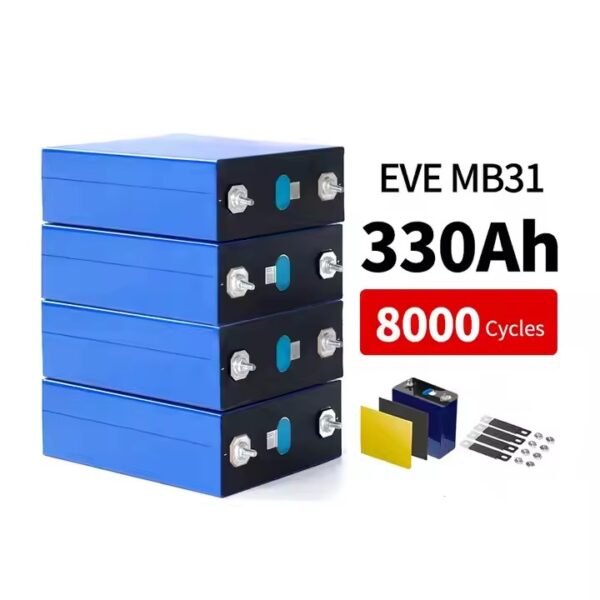
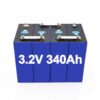
When you need stable energy output, a battery must do more than provide rated capacity. A LiFePO4 battery high performance solution should maintain reliable operation during repeated charging and discharging while offering appropriate safety and power characteristics. The EVE MB31 LiFePO₄ battery from Jule PowerTech provides a 280Ah nominal capacity, 3.2V nominal voltage and 896Wh rated energy in a compact prismatic cell format. For energy storage projects, electric mobility and other demanding applications, these specifications give you a practical starting point for battery system design.
Why Choose a LiFePO4 Battery High Performance Cell?
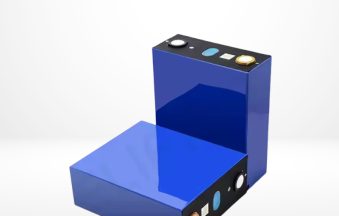
The EVE MB31 uses lithium iron phosphate (LiFePO₄/LFP) chemistry, which is widely used where safety, cycle life and stable operating characteristics matter. Its 280Ah LiFePO4 cell specification also makes it suitable for battery packs that require substantial energy from a relatively small number of cells.
According to the supplied product specifications, the MB31 provides:
- Nominal capacity: 280Ah
- Nominal voltage: 3.2V
- Rated energy: 896Wh
- Charge voltage: 3.65V
- Discharge cut-off: 2.5V
- Maximum charge current: 140A (0.5C)
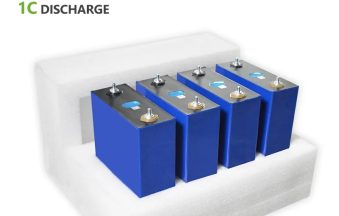
- Maximum discharge current: 280A (1C)
- Cycle life: over 3,000 cycles according to the product information
These figures help you evaluate whether the cell fits your required voltage, energy and current range before building a complete battery system.
EVE MB31 280Ah LiFePO4 Cell for Energy Storage
For residential and renewable-energy projects, cell selection directly affects the usable capacity and operating stability of the finished battery pack. The EVE MB31 can serve as a building block for larger LiFePO₄ systems, particularly when you need a LiFePO4 battery for energy storage applications.
Jule PowerTech has supplied lithium iron phosphate products for markets including golf carts, lead-to-lithium conversions and off-grid home energy storage. The company was founded in 2019 and has developed a 50+ professional team, with a product portfolio covering individual LiFePO₄ cells as well as pre-configured 12V, 24V and 48V battery packs.
For example, you can consider the MB31 when your project requires:
- High-capacity cells for stationary energy storage
- Repeated charge and discharge operation
- Battery packs based on 3.2V cells
- Integration with a suitable BMS
- Customized energy storage configurations
- Battery solutions for electric mobility applications
LiFePO4 Battery High Performance: Key Specifications Compared
The following table summarizes the main MB31 specifications against typical design considerations. Actual system performance depends on cell configuration, BMS settings, thermal management and the complete battery pack.
| Parameter | EVE MB31 | Why It Matters |
|---|---|---|
| Chemistry | LiFePO₄ (LFP) | Determines battery characteristics |
| Nominal Capacity | 280Ah | Defines cell-level capacity |
| Nominal Voltage | 3.2V | Used to calculate series configurations |
| Energy | 896Wh | Helps estimate stored energy |
| Max Charge Current | 140A | Supports appropriate charging design |
| Max Discharge Current | 280A | Relevant to high-load applications |
| Charge Voltage | 3.65V | Important for charging control |
| Discharge Cut-off | 2.5V | Important for BMS protection |
| Stated Cycle Life | 3,000+ cycles | Supports long-term applications |
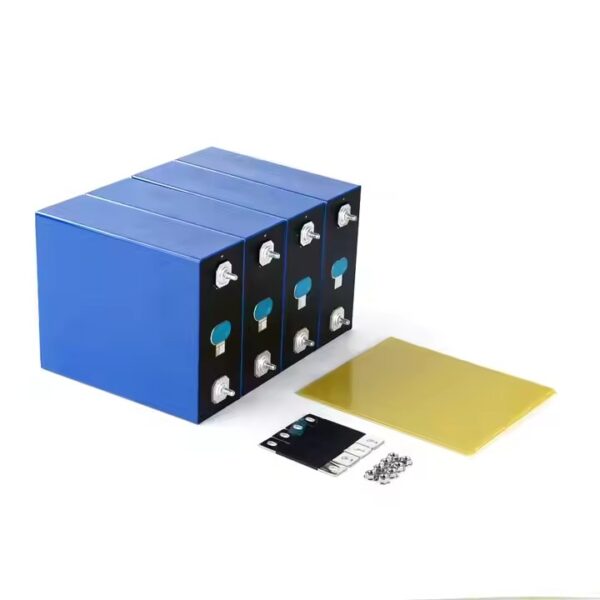
How to Build a LiFePO4 Battery System with MB31 Cells
If you are evaluating the EVE MB31 for a new project, use a structured selection process rather than choosing cells based only on capacity.
- Define your load requirements. Calculate the required voltage, continuous current, peak current and daily energy consumption.
- Determine the cell configuration. Select the appropriate series and parallel arrangement to achieve your target voltage and capacity.
- Match the BMS. Choose protection and monitoring parameters that correspond with the cell specifications and intended operating conditions.
- Check thermal and mechanical requirements. Consider enclosure design, busbars, wiring, cooling and installation conditions.
- Validate the complete pack. Test charging, discharging, protection response and operating performance before deployment.
This approach helps you avoid selecting a cell that looks suitable on paper but does not meet the requirements of the finished battery system.
Jule PowerTech as a LiFePO4 Battery Supplier
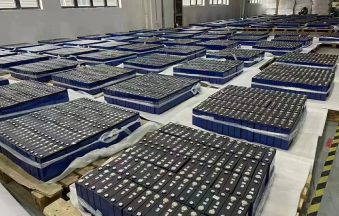
Jule PowerTech focuses on lithium iron phosphate battery products and energy storage solutions. Its capabilities include professional R&D, production quality control, customized battery solutions and after-sales technical support.
The company reports a battery cycle-life capability of up to 8,000+ cycles across its product range, while the EVE MB31 product page specifically states over 3,000 cycles for this model. You should therefore evaluate cycle-life claims according to the specific cell, operating conditions and test methodology rather than applying the company’s general figure to every product.
Jule PowerTech also operates a manufacturing plant and warehouse in Los Angeles, supporting U.S. customers with local logistics and service. The company reports exports to more than 30 countries and regions.
The supplied company information states that its products are designed to comply with international standards, but no specific certification numbers are provided for the MB31. If your project requires certifications such as UL, CE or UN38.3, you should request the applicable documentation from Jule PowerTech before procurement.
FAQ
Is the EVE MB31 a 280Ah battery?
Yes. The supplied MB31 specification lists a 280Ah nominal capacity, 3.2V nominal voltage and 896Wh energy. The separate “31Ah” statement in the product content conflicts with these specifications and should be corrected on the product page.
What is the maximum discharge current of the MB31?
The listed maximum discharge current is 280A, or 1C. Actual pack-level current capability depends on the BMS, busbars, connections, thermal design and operating conditions.
Can the MB31 be used for home energy storage?
Yes, the cell can be considered for home and renewable-energy storage systems when the complete battery configuration is correctly engineered. You should match the series/parallel configuration, BMS and inverter requirements to your target system.
Conclusion
If you need a high-capacity cell for a battery system, the EVE MB31 offers a LiFePO4 battery high performance configuration with 280Ah capacity, 3.2V nominal voltage, 896Wh energy and a listed maximum discharge current of 280A. Its LFP chemistry and cell-level specifications make it a potential option for energy storage, electric mobility and other applications requiring repeated charge and discharge operation. With Jule PowerTech’s LiFePO₄ product range, customization capability and U.S. logistics support, you can evaluate the MB31 according to your specific battery-pack requirements rather than selecting a cell by capacity alone.
CAT
If you are designing a 12V, 24V, 48V or customized LiFePO₄ battery system, contact Jule PowerTech with your required voltage, capacity, continuous/peak current and application. The technical team can help you evaluate the appropriate cell configuration and battery solution.








Add comment