

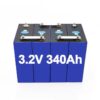
When you select a Large aluminum shell LiFePO4 cell, you need more than a high capacity rating. You must evaluate nominal voltage, usable energy, charge and discharge limits, safety requirements, and compatibility with your battery system. Choosing the wrong cell can increase integration costs and complicate system design, particularly for home energy storage, backup power, and off-grid projects. The EVE MB31 LiFePO4 battery listed by Jule PowerTech provides a useful starting point for technical evaluation, with a stated capacity of 280Ah, a nominal voltage of 3.2V, and an energy rating of 896Wh. Understanding these specifications helps you compare products, plan battery configurations, and identify the information you should confirm before placing a bulk order.
What Is a Large Aluminum Shell LiFePO4 Cell?
A large-format lithium iron phosphate (LiFePO4 or LFP) cell stores electrical energy through lithium-ion electrochemical reactions. Its format, capacity, and electrical characteristics influence how engineers integrate it into a battery pack.
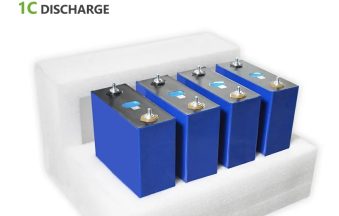
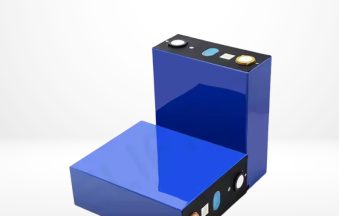
An aluminum-shell design can provide a rigid enclosure for a prismatic cell. However, you should verify the actual enclosure material and dimensions in the manufacturer’s datasheet rather than assume that every large-format LFP cell uses the same construction.
For procurement teams, important selection criteria include:
- Capacity: Determines the nominal charge storage available from the cell.
- Voltage: Affects the number of cells required to achieve the target pack voltage.
- Energy: Helps estimate the nominal energy available from a cell or battery pack.
- Current limits: Define permitted charging and discharging conditions.
- Mechanical design: Includes dimensions, terminal configuration, and enclosure material.
These details help you assess whether a cell suits your battery design before investing in production or system integration.
EVE MB31 LiFePO4 Cell: Key Specifications
Jule PowerTech lists the EVE MB31 product with the following electrical specifications.
| Parameter | Listed specification |
|---|---|
| Battery chemistry | Lithium iron phosphate (LiFePO4) |
| Nominal capacity | 280Ah |
| Nominal voltage | 3.2V |
| Nominal energy | 896Wh |
| Charge voltage | 3.65V |
| Discharge cut-off voltage | 2.5V |
| Maximum charge current | 140A (0.5C) |
| Maximum discharge current | 280A (1C) |
The listed energy rating is consistent with the capacity and voltage figures: 280Ah × 3.2V = 896Wh. These figures provide a useful basis for preliminary system calculations, but actual performance depends on operating conditions and the manufacturer’s specifications.
Before purchasing, confirm the exact MB31 model, capacity, dimensions, terminal design, and enclosure material. The product page also contains a conflicting reference to 31Ah, so you should request an updated datasheet to verify the correct capacity.
Applications of Large-Format LiFePO4 Cells
A large-capacity LiFePO4 cell can support several battery system designs when its electrical characteristics match the application.
1. Home and Off-Grid Energy Storage
For residential solar storage, engineers combine multiple cells to build a battery pack that matches the inverter’s voltage and current requirements. A nominal 3.2V, 280Ah cell provides 896Wh of nominal energy, making it one building block in a larger storage system.
2. Backup Power Systems
Backup power applications require reliable energy delivery during an interruption. When evaluating a large-format LFP cell, consider the expected load, required backup duration, discharge limits, and battery management system (BMS) compatibility.
3. Electric Mobility and Industrial Equipment
Golf carts and other electric vehicles require battery packs designed around motor demand, operating voltage, available space, and expected driving range. Although Jule PowerTech serves markets including golf carts and lead-to-lithium conversions, you should verify that the specific cell is suitable for your intended vehicle or equipment.

How to Select the Right LiFePO4 Cell
Follow these steps before requesting a quotation or committing to a bulk purchase.
- Define your system requirements. Record the target voltage, required energy, peak current, daily usage, and installation space.
- Calculate the cell configuration. Determine the series and parallel arrangement based on the required pack voltage and capacity. Confirm the configuration with a qualified battery engineer.
- Verify technical compatibility. Check the charging profile, discharge cut-off, current limits, temperature range, and BMS requirements.
- Request supporting documentation. Ask for the model-specific datasheet, test reports, applicable safety certifications, and traceability information.
- Evaluate the supplier. Compare product consistency, order quantities, delivery arrangements, warranty terms, and technical support before making your decision.
This process reduces the risk of selecting a cell that meets the capacity target but fails to meet other system requirements.
Large Aluminum Shell LiFePO4 Cell vs. Battery Pack
A cell and a battery pack serve different roles. Understanding this distinction helps you select the right product for your project.
| Comparison | Individual cell | Battery pack |
|---|---|---|
| Main function | Stores energy as a single unit | Combines cells into a usable power system |
| Voltage | Typically 3.2V nominal for the listed product | Depends on the cell configuration |
| Capacity | Listed as 280Ah for this product | Depends on cell capacity and parallel arrangement |
| Additional components | Cell-level terminals and enclosure | May include a BMS, wiring, enclosure, and protection components |
| Typical buyer | Pack manufacturer or system integrator | Equipment manufacturer or end user |
Jule PowerTech offers LiFePO4 cells as well as preconfigured 12V, 24V, and 48V battery packs. If you need a ready-to-integrate solution, compare the available pack specifications rather than assuming that a single 280Ah cell is equivalent to a complete battery system.
Frequently Asked Questions
1. How much energy does a 280Ah LiFePO4 cell provide?
At a nominal voltage of 3.2V, a 280Ah cell provides 896Wh of nominal energy. Actual usable energy depends on the permitted operating range, discharge conditions, and system design.
2. Can a large-format LiFePO4 cell be used for solar energy storage?
Yes, provided the cell is integrated into a properly designed battery system. You should confirm the series configuration, inverter compatibility, BMS settings, charging requirements, and applicable installation standards.
3. What should you check before buying an EVE MB31 battery?
Confirm the exact model, rated capacity, dimensions, enclosure material, electrical limits, manufacturing traceability, and applicable certification documents. Because the listed product information contains conflicting capacity references, request a current manufacturer datasheet before ordering.
Conclusion
Selecting a Large aluminum shell LiFePO4 cell requires careful evaluation of electrical specifications, mechanical construction, safety documentation, and application requirements. The EVE MB31 listing from Jule PowerTech specifies 280Ah, 3.2V, and 896Wh, providing a starting point for comparing large-format lithium iron phosphate cells. Before finalizing your purchase, verify the capacity discrepancy and confirm that the cell meets your project’s technical and regulatory requirements.
Request a Quotation from Jule PowerTech
Contact Jule PowerTech to discuss your required capacity, battery configuration, application, and order quantity. Request the latest datasheet and applicable test documentation to evaluate whether the product fits your energy storage or battery integration project.










Add comment