

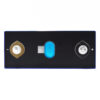
Choosing a Large aluminum shell battery for an energy storage project requires more than checking its capacity. You need to consider energy output, cycle life, thermal stability, internal resistance, and compatibility with your battery management system (BMS). These factors directly affect system performance, operating costs, and long-term reliability. For residential storage, commercial energy systems, and solar installations, a high-capacity lithium iron phosphate cell can provide a practical foundation for building reliable battery packs. Jule PowerTech supplies the EVE 280Ah LiFePO4 cell, designed for applications that require substantial energy capacity, stable electrical performance, and extended service life.
What Makes a Large Aluminum Shell Battery Suitable for Energy Storage?
A large-capacity battery cell helps reduce the number of individual cells required to achieve a target energy capacity. However, you should evaluate its electrical specifications and construction before selecting it for your project.
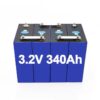
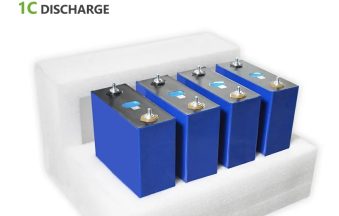
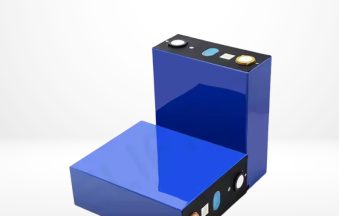
The EVE 280Ah LiFePO4 cell offers the following specifications:
| Parameter | Specification |
|---|---|
| Battery chemistry | Lithium iron phosphate (LiFePO4) |
| Nominal capacity | 280Ah |
| Nominal voltage | 3.2V |
| Rated energy | 896Wh |
| Charging voltage | 3.65V ± 0.05V |
| Termination charge current | 14A (0.05C) |
| Discharge termination voltage | 2.5V |
| AC internal resistance | ≤0.25mΩ |
| Cycle life | Over 6,000 cycles |
| Capacity retention | More than 80% |
These specifications make the cell suitable for high-capacity battery configurations. Its 896Wh rated energy provides a useful reference when calculating the total capacity of a battery system.
The product information identifies the cell as an EVE 280Ah LiFePO4 cell but does not independently confirm its aluminum shell material. Verify the enclosure specification with your supplier before purchasing if an aluminum casing is a mandatory requirement.
Key Benefits of the EVE 280Ah LiFePO4 Cell
1. High Capacity for Large Battery Systems
With a nominal capacity of 280Ah and a voltage of 3.2V, this cell delivers 896Wh of rated energy. You can connect multiple cells in series or parallel to build battery configurations that meet your required voltage and capacity.
For example, a 16-cell series configuration provides a nominal voltage of 51.2V and a theoretical energy capacity of 14.336kWh, assuming identical cell ratings and suitable operating conditions.
2. Long Cycle Life for Extended Operation
The EVE 280Ah cell offers over 6,000 cycles with more than 80% capacity retention under the specified test conditions.
For commercial energy storage operators, longer cycle life can help reduce replacement frequency and improve long-term battery investment planning. Actual service life depends on charging conditions, discharge depth, temperature, and operating management.
3. Stable Performance and Low Internal Resistance
The specified AC internal resistance is no higher than 0.25mΩ. Lower internal resistance can help reduce internal power losses and heat generation during operation.
Combined with the thermal stability associated with LiFePO4 chemistry, this characteristic makes the cell a practical option for applications requiring consistent energy delivery.
4. BMS and Inverter Compatibility
The cell supports integration with major BMS and inverter systems. However, compatibility depends on system voltage, current limits, communication protocols, and configuration.
You should confirm these parameters before assembling a complete battery storage system.

Typical Applications of a 280Ah LiFePO4 Cell
A high-capacity LiFePO4 cell can support several energy storage applications.
- Home Energy Storage: Store electricity generated by residential solar panels and provide backup power when grid electricity is unavailable.
- Commercial and Industrial ESS: Build larger battery systems for energy management, peak shaving, and backup applications.
- Solar Battery Systems: Combine multiple cells to create battery banks for solar energy storage and utilization.
- Electric Vehicles: Supply energy for compatible electric vehicle battery configurations, subject to vehicle-specific electrical and mechanical requirements.
- Telecom Backup Power: Support backup battery configurations for telecommunications equipment.
- Portable Power Stations: Integrate high-capacity cells into appropriately engineered portable energy storage products.
The final battery configuration should always match the application’s voltage, discharge current, protection, and environmental requirements.
How to Select the Right Large Aluminum Shell Battery
Before purchasing a large-capacity LiFePO4 cell, follow these steps to reduce compatibility and procurement risks.
- Define your energy requirements. Calculate the required battery voltage, capacity, and total energy consumption in kWh.
- Check the cell specifications. Compare nominal voltage, capacity, charging voltage, discharge limits, and internal resistance.
- Evaluate cycle life. Review the cycle-life rating and its associated testing conditions, including discharge depth and temperature.
- Confirm BMS compatibility. Check protection functions, current limits, cell balancing, and inverter communication requirements.
- Verify physical construction. Confirm dimensions, terminal design, casing material, and installation requirements with your supplier.
- Review quality documentation. Request available test reports, technical datasheets, and applicable product certification documents before placing an order.
Following these steps helps you select a battery cell that matches your project rather than relying on capacity specifications alone.
Why Choose Jule PowerTech for LiFePO4 Battery Solutions?
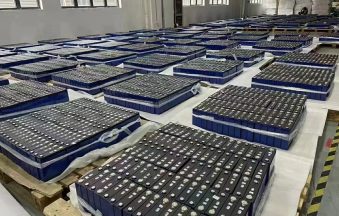
Jule PowerTech Co., Ltd. was founded in 2019 and focuses on LiFePO4 battery cells and battery pack solutions. With a team of 50 professionals, the company serves customers across applications such as golf carts, lead-acid battery replacement, and off-grid residential energy storage.
Its key capabilities include:
- Customized Battery Solutions: Support for different battery configurations and application requirements.
- Quality Control: Testing procedures throughout the production process.
- Technical Support: Assistance with product selection and battery system integration.
- US Market Support: A manufacturing and warehouse presence in Los Angeles, providing a local logistics and service hub for US customers.
Jule PowerTech also offers 12V, 24V, and 48V LiFePO4 battery packs, giving customers options for different energy storage projects.
FAQ
1. How much energy does an EVE 280Ah LiFePO4 cell provide?
A single cell has a nominal voltage of 3.2V and a capacity of 280Ah, resulting in 896Wh of rated energy. Actual usable energy depends on operating limits and system design.
2. How long does a 280Ah LiFePO4 cell last?
The specified cell offers over 6,000 cycles with more than 80% capacity retention. Actual cycle life varies with charging and discharging conditions, operating temperature, and maintenance.
3. Can the EVE 280Ah cell be used for solar energy storage?
Yes. It is suitable for solar battery systems when assembled into a properly designed battery pack. You must ensure that the BMS, inverter, charging parameters, and system voltage are compatible.
Conclusion
Selecting a Large aluminum shell battery requires careful consideration of capacity, electrical specifications, cycle life, and system compatibility. The EVE 280Ah LiFePO4 cell offers 896Wh of rated energy, over 6,000 cycles, and low specified internal resistance, making it a suitable candidate for residential and commercial energy storage projects. With customized battery solutions and technical support, Jule PowerTech helps customers evaluate LiFePO4 cells and develop battery configurations for different applications.
Looking for a 280Ah LiFePO4 cell for your energy storage project? Contact Jule PowerTech to request product specifications, discuss battery configuration requirements, and confirm availability for your application.








Add comment